Friday, December 7, 2012

Winter Park History: The Importance of Ergood's Store and Hall

One of the first buildings erected in Winter Park by the town's founding father's Oliver Chapman and Loring Chase, would become known as Ergood's Hall (interchangeably known as Ergood's Store). Owned by John R. Ergood, Ergood's would officially open in September 1882 on the corner of North Park Avenue and Morse Boulevard. While it was first opened as a store, due to a small number of buildings in Winter Park, the store had many functions. But just how important was Ergood's to Hannibal Square (west side and housed the Black community of Winter Park) and the rest of the rich side of town?


One of Ergood's earliest shots of what the original building looked like as well as the scarcity of the rest of the town. Unlike today where Park Avenue is packed with stores and restaurants, Winter Park was still in its beginning stages as a town, let alone the thought of it being anywhere close to a city.


With the word "Furniture" written across the top, Ergood's is located as the first building in this picture circa 1888. Since Winter Park was still particularly small with few buildings spaced far apart, the buildings that were erected by Chase and Chapman needed to be of importance to the town and its community (even if it was created with luxury and vacationing in mind).

This was an eastern view of Morse Boulevard and of a more developed Winter Park. The first building to the left was what used to be Ergood's. This picture was taken after 1900 (but before 1928) and housed what is known here as the Winter Park Pharmacy, established by Dr. Jerry Trovillion. Before it became the Winter Park Pharmacy, Ergood's Hall and Store was more than just a store. It held Winter Park's Town Hall where city officials met to conduct business that affected all parts of the community. Ergood's was also converted into a general hall for church meetings for different congregations varying from Presbyterian to Methodist. It also housed the first Sunday School as well as classes for Rollins College when they first opened. Not only was John R. Ergood the owner of the store he also became Winter Park's postmaster and the back of the store was where the post office was located.
Fast forward 130 years from Ergood's first year of business, in 2012 where the building used to be is now a Penzey's Spices. After Dr. Trovillion bought the store from Ergood and made it into Winter Park's first soda fountain and the new pharmacy, it would continue to change over the years. In 1931 the name would change to the Corner Drug Store and in 1948, Taylor's Pharmacy. By 1987 it would be the new location of the Banana Republic before becoming Penzey's.


As Winter Park progressed and became more of the town and then city it originally set out to be, one of luxury and relaxation, the uses for the original stores were no longer as sought after. Now there is more room for buildings that house items that are not necessarily needed for a town to thrive and survive. While the original store is no longer there and it has changed significantly over the years, that does not by any means make Ergood's any less important to Winter Park's upward movement in prosperity. The importance of Ergood's Hall and Store and the historical presence it held was captured in the city's 125th anniversary as it celebrated all the businesses, buildings and people that help make Winter Park what it is today.

Sources:
Claire Leavitt MacDowell, Chronological History of Winter Park, Florida (1950), 22.
Barbara White:
- "Ergood's Store and Hall," Winter Park Public Library, www.wppl.org
- "Winter Park Streets: Morse Boulevard," Winter Park Public Library, www.wppl.org

"Historic Downtown Winter Park: A Walking Tour" Winter Park Historical Association, www.winterparkhistory.org

www.archives.rollins.edu

Jennifer Kopf, "Winter Park Celebrates 125th Anniversary" www.wpmobserver.com


Thursday, December 6, 2012

Journey to Work: Being African American Outside of Hannibal Square

While Winter Park welcomes everyone to its slow paced streets lined with boutiques and French café inspired restaurants, this city was not always as welcoming to minorities. Winter Park's Black neighborhood, Hannibal Square, was not incorporated into the city limits until 1887 and even then African Americans were not particularly embraced or liked among the Whites of the richer area of the (then) town. However this was pretty customary for any small town in the South and Central Florida was no exception. While the west side (Hannibal Square) was newly incorporated due to an election that also brought in two new city aldermen, Frank Israel and Walter B. Simpson, both African American, these stepping stones towards acceptance from Whites probably did not stop segregation or racial tension. In fact, both the election and incorporation probably only infuriated some people even more. That being said it is highly likely that Walter B. Simpson's journey to work as not only an African American but as a politician among White fellow political leaders must have been tense at best. What would walking to Ergood's Hall and Store (where Winter Park's Town Hall was located on the White side of town) as a Black city official feel like and at what areas or parts of his journey would the racial divide become obvious?


One of Walter B. Simpson's possible routes to work to Winter Park's Town Hall (located within Ergood's Hall and Store) as a city aldermen. While there are several ways he could have traveled to get to Ergood's on the corner of Morse Boulevard and Park Avenue, this is one of the easier and more straightforward paths.


Today these tracks are just that, railroad tracks. But like many old towns and cities, Winter Park holds railroad tracks that also set up a racial division between Whites and Blacks or other minorities. The west side of Winter Park (also known as Hannibal Square) is located on the west side of the tracks and where African Americans, including Walter B. Simpson, lived during the construction and early years of Winter Park. To this day, this neighborhood is predominantly Black.

If Walter B. Simpson did in fact take this route from New England Avenue to Park Avenue and then Morse Boulevard then his venture into the White part of the neighborhood shortly after New York Avenue after crossing the railroad tracks. Park Avenue would have "officially" belonged to the White, richer area of Winter Park where Blacks worked but never lived on or spent much recreational time if any. Even during the election in which Simpson won and where the polls were located on the White side of town, it was dangerous for Blacks to venture alone to cast their votes for obvious political and racial reasons. These reasons included the fact that elections were held after the city's curfew, which did not allow African Americans to venture into the White side of town after dark.

At the corner of Morse Boulevard and Park Avenue stood Ergood's Hall and Store where Simpson's journey to work would end and where other city officials conducted town meetings and other official business.


If Ergood's were to be standing today, this would be its location. What is located there today is a Penzey's Spices. Walter B. Simpson's journey from his neighborhood to this business, which held many functions and purposes at once, located in the White part of town would have taken him approximately less than a mile from his home. However, as short of a distance as Ergood's was from his neighborhood, it must have felt like a place where he was unwanted and truly a minority.


Due to the city's location of Hannibal Square and what exactly divided the city in half, showing which part belonged to which race, it is obvious where Walter B. Simpson's journey into a different part of town began. Once Simpson walked past the railroad tracks and onto Park Avenue, his racial identity suddenly made him very different from those who owned businesses there and who vacationed there as well. While he might have been in charge of solving several political issues that affected the entire town, nonetheless the fact that he was a Black man did not help solve the racial segregation that existed in his time.

Sources:


Old Winter Park Road


In the story “Joyce Kilmer Was Right!,” Sarah (Mrs. Joe K) Galloway illustrates changes in society as the ladies of the Winter Park community engaged in activism in order to save the trees of the Old Winter Park Road. Prior to the 1950s, the Old Winter Park Road was a “nature country –like tree-line”[1] road that connected the city of Winter Park to Orlando. However, during the 1950s due to an increase of traffic the commissioners of Winter Park ordered the widening of the Old Winter Park Road, which required cutting down the trees around it. The ladies efforts were ineffective as the road did get widen, however, today the Winter Park Road consist of a wider road as well as tall beautiful trees. Along with the representation of the social changes the United States was experiencing post World War II, the widening of the Old Winter Park Road also reflects the urbanization the United States was undergoing at the time. However did urbanization continue to affect Winter Park after the 1950s?
This picture illustrates how the Winter Park Road looks like in the year 2012. Despite the trees being cut down in order to widen the road, like the Old Winter Park Road in the 1950s, in 2012 this road continues to have the tall beautiful trees that hover over the street.
Although Winter Park Road continued to have the tall beautiful trees, it did go through some major changes. In the 1950s the Old Winter Park Road was a country-like tree-line road, however, along with its widening there was also an addition of houses constructed on each side of the road.

Furthermore, in the 1950s the Old Winter Park Road connected the city of Winter Park to the city of Orlando and the widening of the road was due to an increase of traffic at the time. The picture above is the Interstate 4 ramp on Fairbanks Avenue, Winter Park FL 


The Interstate 4 ramp on Fairbanks Avenue is an alternative route that connects the city of Winter Park to the city of Orlando. While the Winter Park did get widen, as show in the picture, I-4 is twice its width. Nonetheless, the twofold of I-4’s width is an accommodation of the continuous increase of traffic between the two cities.

The collection of pictures shown above depicts how both urbanization and metropolitanization has continued to change Winter Park Florida. Post 1950s the automobile and real estate developer shaped the cities in Florida. These cities were characterized by low-density development, small urban centers, and horizontal sprawl, which classified them as metropolitan areas. Furthermore, throughout the 1950s and 1960s an urban sprawl fed the suburbs. Although there was an increase of families living in the suburbs, their jobs were still located in downtowns. Consequently, commuting became an everyday normality and thus created what geographers called the phenomenon of cities and counties growing and blending together, conurbation.  This not only explicates the increase of traffic, but it also explains why houses now surround the Winter Park Road. In fact, Winter Park could be considered a suburb since it is a community of houses located outside of the city of Orlando.  Moreover, commuting continues to play a role for the residents of Winter Park as the drive to their jobs located in downtown as well as other areas of Orlando. Additionally, post 1950s urbanization and metropolitanization also elucidates why there are alternative routes that connect Winter Park to Orlando, specifically, the wider Interstate 4 that connects Fairbanks Avenue in Winter Park directly to the downtown of Orlando.


[1] Sarah (Mrs. Joe K) Galloway, Tales of Winter Park, Joyce Kilmer Was Right,76.

One Man’s Journey to Work and the American Dream


Throughout the 1950s a national ethos took over the United States. This was the American Dream. The American Dream was an ideal in which freedom included the opportunity for success, a white picket fence, safety, community, and all that was good in the world. It culminated in the Cold War world as a democratic vision that communist enemies could not imagine achieving. As a result, countless Americans embarked to achieve this dream. They all started from various points - rich, poor, country, and city. It was an effort filled with numerous twists and turns such as deaths in family or national crisis. Even after these families finally moved to the suburbs and seemingly achieved the dream they had to maintain their income and lifestyle through employment and making a journey to work daily.[1] This can specifically be seen when examining one World War II veteran, Charles Thomas Anderson, who moved to the Orlando suburb of Winter Park, Florida from his hometown in Kentucky with his growing family in 1955. There, he found a home, a job at the United States Post Office, and the all-mighty American Dream. The mail route that Mr. Anderson then took daily from the mid-1950s until his retirement in 1974 was the constant movement to maintain the American Dream.[2] A present examination of this journey will piece together whether these efforts of maintaining the suburbs and the American Dream still exists today.

Charles Thomas Anderson embarked on his journey at the Winter Park United States Postal Office, located on New York Avenue. Despite there being multiple of postal offices throughout the area, he would choose begin his journey at this one and it remains the starting point for this mail route today.

Throughout his journey through his mail route, Charles Thomas Anderson would often have to take numerous twists and turns, just as with the left onto Park Avenue that is depicted in the picture above. These twists and turns were part of Mr. Anderson’s travels and the current mailman’s as well.

Charles Thomas Anderson finished his route at the end of Palmer Avenue. However, his journey would not actually be over for he this was not just a one-time excursion. Both him and his predecessors would have to continue to make this journey day after day.
  
Everyday in the 1950s, Charles Thomas Anderson would make this journey to deliver his mail route on foot. It was one and a half miles long and took him approximately twenty-five minutes, depending both on the day and the weather. As years went by, this route would remain unchanged.

Everyday, Charles Thomas Anderson would embark from Winter Park Post Office. He would head north on New York Avenue from the Winter Park Post Office, take a right on West Canton Avenue, a left on Park Avenue, a right on East Stovin Avenue, and then a right again on Palmer Avenue.[3] This was the journey to work that Charles Thomas Anderson took to preserve his life in the suburbs and the American Dream. His journey, like the American Dream began with a starting point, was filled with twists and turns, and was a never-ending effort to maintain it. Most importantly, the mail route, and all the aspects that came with it, that Mr. Anderson traveled remains unchanged – proving that the efforts of maintaining the suburbs and the American Dream still exists today.


Bibliography
Primary
"Funeral Notice- Charles Thomas Anderson." The Orlando Sentinel, January 15, 2006.

Secondary
Horowitz, David and Carroll, Peter. On the Edge: The United States Since 1945. Belmont: Wadsworth/Thompson Learning, 2002.

Metler, Suzanne. "The Creation of the G.I. Bill of Rights of 1944: Melding Social and Participatory Citizenship Ideals." Journal of Policy History 17, no. 4 (2005): 345-374.

Mormino, Gary. Land of Sunshine, State of Dreams. Gainesville: University Press of Florida, 2005.

Teaford, John. The Metropolitan Revolution. New York: Columbia University Press, 2006.


[1] David Horowitz and Peter Carroll, On the Edge: The United States Since 1945, (Belmont: Wadsworth/Thompson Learning) 2002.
[2] "Funeral Notice- Charles Thomas Anderson," The Orlando Sentinel.
[3] "Funeral Notice- Charles Thomas Anderson," The Orlando Sentinel.

NAS Sanford: Its History and Importance (Luke Bohmer)


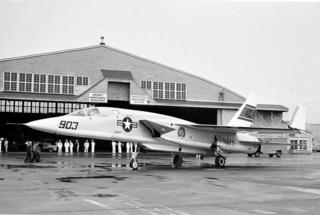
         How important was the Naval Air Station to the city of Sanford, Florida? Historically, NAS Sanford was integral in the Korean and Vietnam Wars by training pilots for over half of the US Navy’s carrier-based strike craft. The airbase was integral to the Cold War on a military level, but also on a demographic level that heavily impacted Sanford as a city. As the 1950s and 60s wore on, Sanford, a historically black community of celery farmers and river-based transportation, became a hub for white middle class enlisted men and their families. After it was decommissioned in 1968, NAS Sanford dealt a massive financial blow to Sanford that the city is still recovering from.  Today, the community is returning to its predominantly African American roots, but the importance of NAS Sanford cannot be ignored.
            This is the photo of the control tower at NAS Sanford. From here, all incoming and outgoing flights are coordinated. Even though today Orlando Sanford Airport is fairly small, during the 1950s and 60s, the control tower was responsible for coordinating drills and exercises to train pilots. This was one of the only structures still standing from the days of NAS. 
In terms of location, NAS Sanford occupied prime real estate in a field just south of historical downtown Sanford. It was far removed from the actual city proper, separated by about three to five miles of open countryside. Most of the field and surrounding swampland were later occupied by housing communities for enlisted men and their families. This saw to a massive demographic change in the latter years of NAS Sanford’s life.
These parking garages used to be either open fields or military hangers while NAS was in service. Once it was repurposed in 1968, more civilian structures were constructed to accommodate the larger volumes of people on site. Most of the structures such as the parking garages and terminals are of 1970s construction.
This is the terminal to Orlando Sanford Airport. Like with most of the other structures on the property, the terminal was built in the 1970s or 80s after the base was decommissioned. Its relatively small size is indicative of the small amount of commuters going through the airport on a daily basis. Today, it is dwarfed by the much larger Orlando International Airport. 
The most indicative image of NAS Sanford’s impact on Sanford is that of the sheer number of old suburban housing communities located right next door to the airbase in the adjacent swampland. These communities were built almost exclusively during the twenty-five years when NAS was in service, with their primary purpose being housing the families of enlisted men and pilots.
This photo shows an areal view of Orlando Sanford International Airport as it stands today. Originally, the base consisted of the two main runways, along with roughly half a dozen hangers and a control tower. Today it is substantially bigger, with added runways and a terminal, but still much smaller than most commercial international airports.
Through its twenty-five years of service during the Cold War, NAS Sanford was an integral part to the United States war effort in Korea and Vietnam. This, however, paled in comparison to the effects it had on the city proper to the north. Even though the facilities themselves were small, the subsequent residential buildings brought in a whole new demographic of people. More money poured into the small farming community as the city grew to accommodate the growing white population. However, when the base was decommissioned, the white population seemed to move out of Sanford, as well as a large number of businesses that had initially followed them. Today, Sanford is a small peripheral city twenty miles north of Orlando with a sizable African American population. Undoubtedly, Sanford would have remained a small community had it not been for the Cold War and the base that so drastically changed Sanford’s demography.


Bibliography
Primary Source

Subism.com. “RVAH-9 RA-5C Vigilante at NAS Sanford, Fl 1966” http://img147.imageshack.us/img147/3623/rvah9goodpicqn6.jpg
Secondary Sources
NAS Sanford History, January 1, 1995, http://www.nassanfordmemorial.com/NAS_History.htm (accessed November 25, 2012).
Metzger V, Lewis W. FROM CELERY CITY TO NAVY TOWN: THE IMPACT OF NAVAL AIR STATION SANFORD DURING WORLD WAR II (Gainesville, Florida: University of Florida, 2010).           
University of Virginia, Historical Census Browser, 2007, http://www.nassanfordmemorial.com/NAS_History.htm (accessed November 25, 2012). 
Wikipedia.org “Orlando Sanford Airport” http://en.wikipedia.org/wiki/File:Orlando_Sanford_International_Airport.jpg